AICTE Courses 2026: List of Approved Courses, Eligibility, Registration, Fees & Career Options
AICTE Courses 2026 are attracting students who want to understand which technical, management, computer application and skill-based programmes are available through AICTE-approved institutions and related initiatives.
The All India Council for Technical Education (AICTE) regulates and coordinates technical education in India and publishes norms covering approved programmes, course nomenclature, intake and institutional requirements. Its approval framework includes programmes in areas such as engineering and technology, management, computer applications and other technical disciplines.
Students should remember one important point: AICTE approval does not mean that AICTE directly teaches every course listed by colleges. In most cases, students take admission to an AICTE-approved institution and programme. AICTE also operates or supports separate initiatives such as the National Educational Alliance for Technology (NEAT), which provides access to a range of technology and employability-focused courses.
AICTE Courses 2026 – Quick Overview
| Particular | Details |
| Organisation | All India Council for Technical Education |
| Academic Year | 2026 |
| Main focus | Technical, management, computer applications and skill-oriented education |
| Course levels | Diploma, UG, PG and certificate programmes |
| Popular areas | Engineering, Computer Applications, Management, AI, Data Science, Cyber Security |
| Course availability | Depends on institution and approved intake |
| Official website | AICTE portal |
| Skill-course platform | NEAT |
What Are AICTE Courses?
The term AICTE courses generally refers to programmes offered by institutions that fall under AICTE’s applicable approval framework.
The official AICTE approval documentation specifies recognised programme and qualification nomenclature. For example, computer applications can include BCA and MCA, while specialised areas can include Artificial Intelligence and Data Science, Artificial Intelligence and Machine Learning, Cyber Security and Blockchain at applicable postgraduate diploma or certificate levels.
Therefore, students should check the specific college, programme name, approved intake and current admission information rather than assuming that every course advertised online is automatically an AICTE-approved programme.
AICTE Courses List 2026
Some of the major course areas students may find in AICTE-approved institutions include:
1. Engineering and Technology
Engineering remains one of the largest areas covered by AICTE’s technical education framework. Depending on the institution, students may find programmes related to:
- Computer Science and Engineering
- Information Technology
- Electronics and Communication Engineering
- Electrical Engineering
- Mechanical Engineering
- Civil Engineering
- Artificial Intelligence and Machine Learning
- Data Science
- Other emerging technology disciplines
The exact availability and approved intake can differ from one institution to another.
2. Computer Applications
Computer application programmes are another important category. AICTE’s approval documents include BCA and MCA within the computer applications area.
Students interested in software development, databases, programming, cloud technologies and information systems can consider relevant programmes based on their academic background.
3. Management Courses
AICTE’s framework also covers management-related programmes. Depending on the institution and approval, students may encounter programmes such as:
- BBA/BMS
- MBA
- PGDM
- Post Graduate Certificate in Management
The eligibility and duration depend on the specific programme and institution.
4. Emerging Technology Courses
Technology-focused programmes are becoming increasingly important. AICTE documentation includes areas such as Artificial Intelligence and Data Science, Artificial Intelligence and Machine Learning, Cyber Security and Blockchain for applicable diploma/certificate-level offerings.
Students should verify the exact qualification level and approval status before applying.
AICTE Courses Eligibility 2026
Eligibility is not the same for every AICTE course. It depends on the programme, university and admission rules.
For example, AICTE’s approval documentation provides different entry requirements for diploma, postgraduate and management programmes. A diploma programme may have a Class 10 entry requirement, while programmes such as MCA and MBA generally require a bachelor’s degree meeting the applicable conditions.
General eligibility guide
| Course Level | General Academic Requirement |
| Diploma | Usually Class 10 or equivalent, depending on programme |
| UG | Class 12 or equivalent, depending on programme |
| BCA | Class 12/equivalent as prescribed by institution |
| MBA | Bachelor’s degree as prescribed |
| MCA | Bachelor’s degree with applicable subject requirements |
| PG Diploma | Bachelor’s degree or relevant qualification |
Always check the latest admission notification of the institution before applying.
How to Check AICTE Approved Courses and Colleges
Students should avoid relying only on third-party lists.
Before taking admission, check:
- Name of the institution.
- Exact course/programme name.
- Approved intake.
- Academic year.
- Institution’s official admission notice.
- Fee structure.
- University affiliation, wherever applicable.
- AICTE approval information.
AICTE’s approval framework requires institutions to provide information such as course nomenclature, approved intake and fee-related details through the prescribed disclosure process.
AICTE Courses Registration 2026
There is no single registration form for every “AICTE course.”
For regular degree and diploma programmes, students generally apply through the concerned college/university or the applicable state/national admission process.
For technology and employability-focused learning, students can also explore the NEAT course platform, which currently lists categories such as certification courses, coding and testing, career counselling, placement support, emerging technologies and other employability-focused learning options.
Official course platform: AICTE NEAT Courses
AICTE Courses Fees 2026
There is no single AICTE fee applicable to all courses.
Fees can vary significantly according to:
- Course type
- Government or private institution
- State
- University
- Duration
- Specialisation
- Infrastructure and other institutional charges
Students should therefore check the official fee notice of the college or university before paying any amount.
Be cautious of websites claiming that a fixed “AICTE course fee” applies to all institutions.
AICTE Courses and Career Options
Choosing a course should depend on your career objective rather than the AICTE name alone.
For example:
| Interest Area | Possible Career Direction |
| Computer Science | Software Developer, System Engineer |
| AI & ML | AI/ML Engineer, Data Professional |
| Data Science | Data Analyst, Data Scientist |
| Cyber Security | Security Analyst, Cybersecurity Professional |
| Electronics | Embedded Systems, Electronics Engineer |
| Mechanical | Design, Manufacturing, Production |
| Civil | Construction, Infrastructure, Project Roles |
| Management | Business, Marketing, Finance, Operations |
Actual career opportunities depend on the student’s skills, qualification, projects, internships and employer requirements.
AICTE Internship and Placement Opportunities
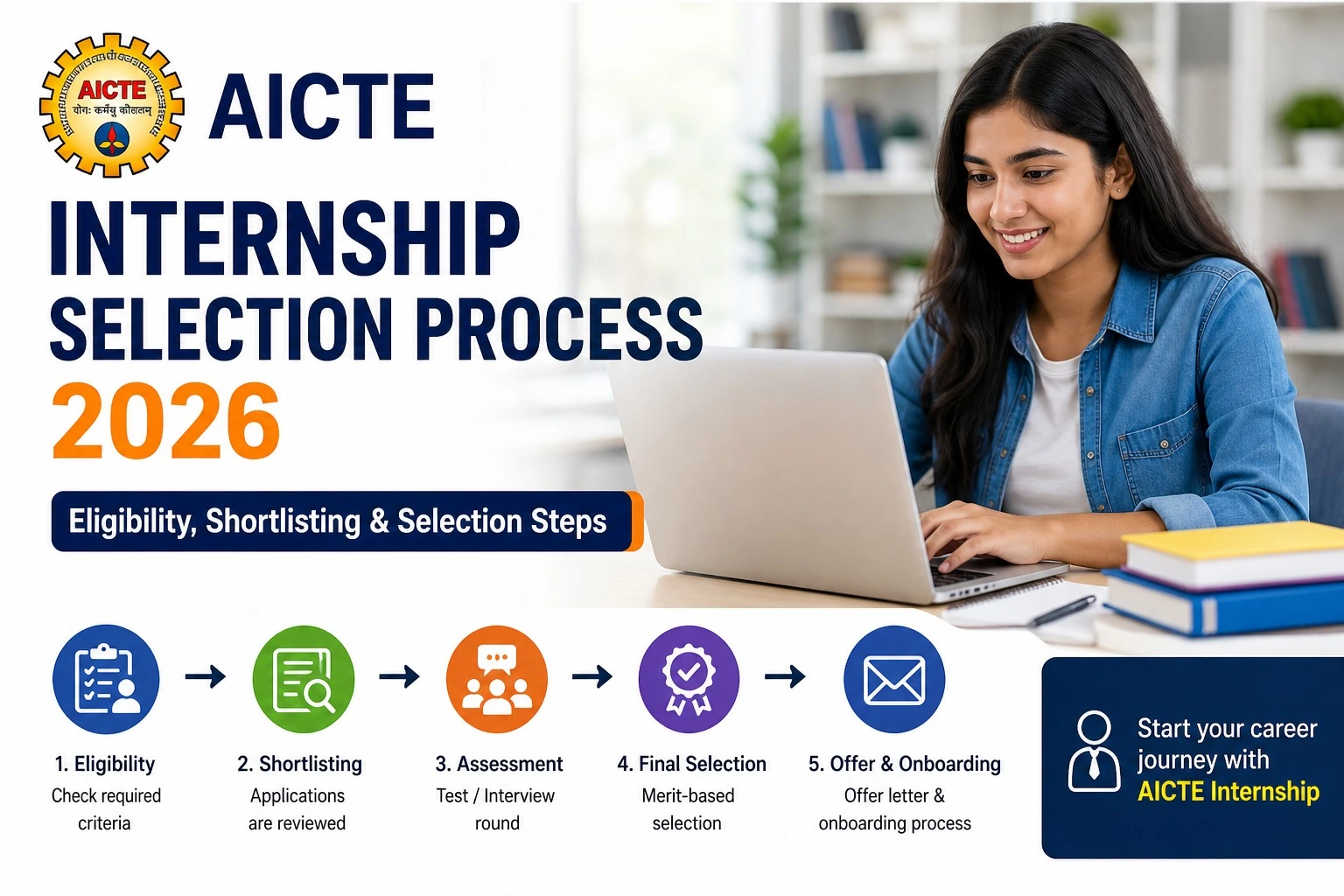
Students can also explore AICTE-linked internship and placement resources while studying.
The AICTE Internship Portal currently lists internships across areas including AI/ML, data analytics, IoT, cybersecurity, cloud computing, web development and other technical fields.
The AICTE Placement Portal also provides student registration and job-search functionality.
These resources can be useful because practical experience can complement a formal academic qualification.
Important Links for AICTE Students
| Resource | Purpose |
| AICTE | Official council and approval information |
| NEAT | Technology and employability courses |
| AICTE Internship Portal | Internship opportunities |
| AICTE Placement Portal | Placement and job resources |
Useful official links:
FAQs on AICTE Courses 2026
What are AICTE Courses 2026?
AICTE courses generally refer to technical, management, computer application and other programmes offered under the applicable AICTE approval framework through recognised institutions.
Does AICTE directly provide all these courses?
No. AICTE primarily regulates and supports technical education. Colleges and institutions offer their approved academic programmes. AICTE also has initiatives such as NEAT for technology and employability-focused courses.
Is BCA an AICTE course?
BCA is included under the computer applications nomenclature in AICTE’s approval documentation. However, students should verify the current status of the particular institution and programme before admission.
Are AICTE courses free?
Not necessarily. Regular academic programmes generally have institution-specific fees. Some skill and technology learning opportunities may be free or subsidised, depending on the programme.
How can I check whether a college or course is approved?
Check the current AICTE information for the institution and programme and compare it with the college’s official admission and disclosure information.
Final Words
AICTE Courses 2026 cover a wide range of academic and skill-development opportunities, from engineering and computer applications to management and emerging technology areas. However, students should not select a course simply because it carries the AICTE name.
Before admission, verify the institution, programme, approval information, eligibility, fee structure and current admission notification. For additional practical exposure, students can also explore AICTE’s internship, placement and NEAT resources.
For students planning their career in technology, management or other technical fields, combining an appropriate academic qualification with projects, internships and industry-relevant skills can make the course much more valuable.